Most collectible coins cannot go into a self-directed IRA because the IRS treats them as collectibles, a category retirement accounts are not allowed to hold. A narrow set of named U.S. coins and bullion products are exceptions, and even those must sit in the physical possession of a qualifying trustee rather than in your home or a personal safe. Before buying anything, get written confirmation from your custodian.
TL;DR:
- Only specific American Gold Eagle, Silver Eagle, and Platinum Eagle coins, plus state-issued coins, qualify for IRA inclusion under federal law.
- Bullion must meet a minimum fineness standard and be held in the physical possession of a qualified trustee, not the investor.
- Acquiring a non-qualifying coin in an IRA triggers a taxable distribution equal to its cost, plus potential penalties if under age 59½.
- Get written custodian approval and detailed documentation before purchasing, and avoid home storage or self-managed LLC structures to stay compliant.
- Most collectible or graded coins are not suitable for IRAs due to valuation, resale, and custody restrictions.
Table of Contents
- Which named coins qualify under federal law
- The bullion path: fineness and trustee possession
- What happens if your IRA holds a disallowed coin
- Eligibility is not the same question as investment merit
- Step-by-step: buying an IRA-eligible coin the right way
- How we support a compliant IRA coin purchase
- Our take: when collectible coins belong in a retirement account
- Start your Precious Metals IRA the right way
- FAQ
- Sources
Which named coins qualify under federal law
The Internal Revenue Service treats coins and metals as collectibles by default for IRA purposes. That default is overridden only for a short list of coins named in the statute itself, Internal Revenue Code Section 408(m)(3)(A), which points back to the coin descriptions in 26 U.S. Code § 408 and 31 U.S.C. §5112.
The named exceptions cover American Gold Eagle coins across their standard denominations, the American Silver Eagle, the American Platinum Eagle, and coins issued under the laws of any state. That is the full list. A coin does not qualify just because it is made of gold, silver, platinum, or palladium, and a proof or limited-mintage version of an eligible coin does not automatically pass the test either. The statute anchors eligibility to the exact denomination and metal content described in law, not to how a dealer markets the piece.
When you are checking a coin’s eligibility, look for these specifics on the product listing and the invoice:
- The exact coin name and denomination, matching the statutory description word for word.
- A stated reference to 31 U.S.C. §5112 or explicit confirmation the coin is a U.S. Mint bullion coin, not a commemorative or foreign issue.
- Metal content and weight printed clearly, not estimated.
- Any language suggesting “collector’s edition,” “limited proof,” or “exclusive mintage,” which should prompt a second look rather than an assumption of eligibility.
Even a coin that appears to check every box on paper still needs sign-off from your custodian before you commit funds. Custodians sometimes apply stricter internal rules than the statute requires, and getting that approval in writing avoids a costly mistake later. Our investing in coins for retirement guide walks through additional detail on which products custodians typically accept.
The bullion path: fineness and trustee possession
Coins are not the only route into an IRA. Bullion bars and rounds can qualify under a separate test in Section 408(m)(3)(B), and that test has two parts that both have to be satisfied at once.
First, the bullion has to meet the minimum fineness required for delivery on a regulated futures contract, a standard set by commodity exchanges rather than a single flat percentage written into the tax code. Second, the metal has to sit in the physical possession of a trustee, meaning a bank or an IRS-approved nonbank custodian, not the investor and not a dealer’s storage certificate that leaves title ambiguous.

Roughly two-thirds of the statute’s exceptions hinge on this fineness-plus-custody combination rather than on any named product, according to the IRS’s own explanation of collectible rules, which means getting both halves right matters more than memorizing a single coin name. A dealer’s assurance that a product is “IRA-approved” is marketing language, not a legal determination.
Custodians typically ask for a specific documentation trail before they will accept a bullion purchase into an account:
- A fineness or assay specification tied to the exact product, not a general metal grade.
- An invoice that references the fineness standard and ties the purchase to the IRA account.
- A depository receipt showing the trustee has taken physical possession.
- Written trustee acceptance confirming the product meets its internal policy.
Our guide on IRA-approved silver fineness rules breaks down how this test applies specifically to .999 fine silver products, which is where investors most often run into trouble.
What happens if your IRA holds a disallowed coin
If an IRA acquires a coin or metal that does not meet either exception, the tax code treats that acquisition as if the IRA had made a distribution to you equal to the cost of the item. That distribution is generally taxed as ordinary income, and if you are under 59½, a 10% early-distribution penalty can apply on top of it, according to IRS guidance on prohibited transactions.
Personal possession creates the same problem even with an eligible coin. Taking an IRA-owned coin home, or structuring an IRA-owned LLC so that you personally control where the metal is stored, has been challenged in Tax Court. In one widely discussed case, the court rejected the argument that home-stored metal inside an IRA-owned LLC structure counted as trustee possession, a finding summarized in coverage of that ruling. The practical lesson is the same regardless of the structure: if you can touch it, your IRA probably does not legally possess it.
A few precautions prevent this outcome entirely:
- Never accept a dealer’s offer to ship IRA-purchased metal to your personal address.
- Require a custodial receipt and a corresponding line on your account statement before you consider the purchase complete.
- Treat any home-storage or self-managed LLC pitch as a red flag rather than a convenience.
Our breakdown of home storage gold IRA mistakes covers the McNulty case and similar structures in more depth, and our overview of gold IRA rules lays out the custodial framework from the start.
Eligibility is not the same question as investment merit
Qualifying for an IRA and being a sound retirement holding are two separate questions, and collectible coins expose the gap between them more than almost any other asset class.
Bullion pricing is transparent: it tracks the metal’s spot price plus a dealer premium that is usually easy to compare across listings. Numismatic or collectible coin pricing depends on rarity, mintage numbers, condition, and subjective grading, factors that the U.S. Mint’s own description of bullion versus collectible coins distinguishes directly. A graded coin’s third-party certification can also become a point of dispute at resale, since grading standards carry some subjectivity and not every buyer trusts every grading service equally.
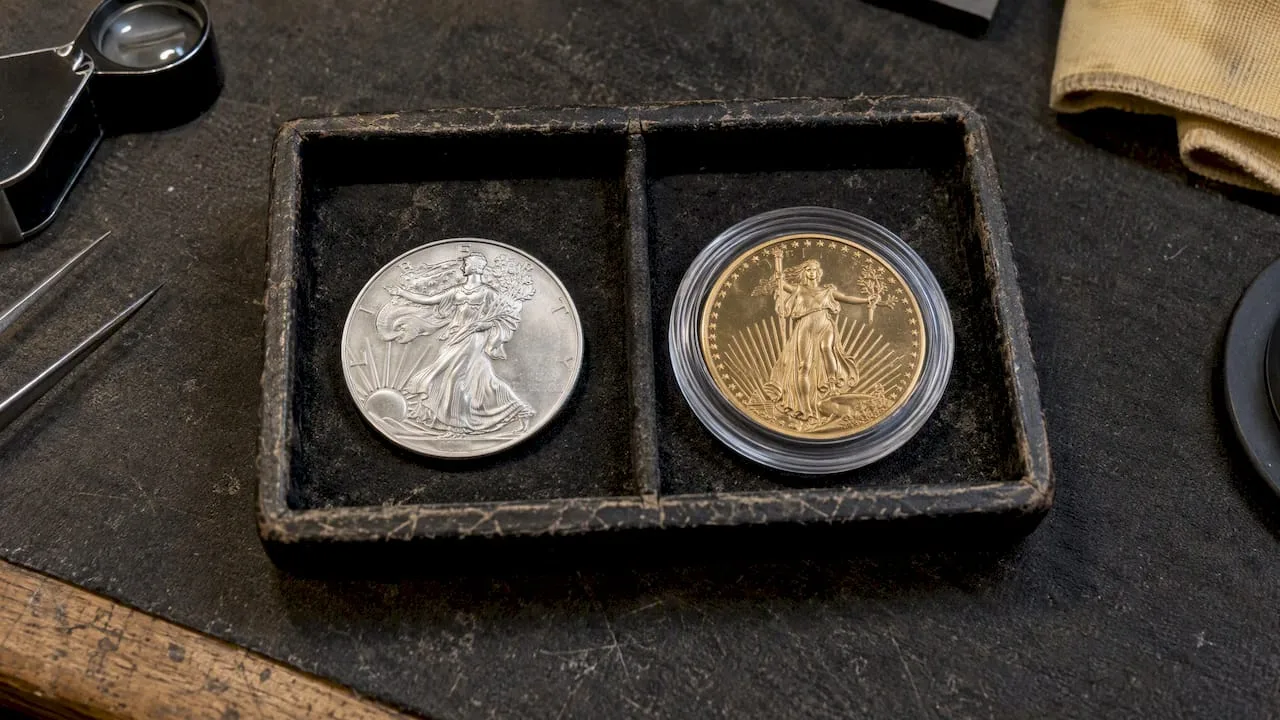
That grading uncertainty feeds directly into liquidity. A widely held bullion coin has a deep pool of buyers and a narrow bid-ask spread, while a rare numismatic piece may take considerably longer to sell at a price close to its appraised value.
Pro Tip: For retirement accounts, favor coins with lower premiums over spot price and high trading volume rather than rare or specially graded pieces.
Step-by-step: buying an IRA-eligible coin the right way
Once you understand which coins and bullion products qualify, the purchase process itself follows a fairly consistent sequence of steps across custodians.
- Confirm your custodian’s specific policy on named coins and bullion fineness before shopping.
- Identify the exact product, including denomination, metal content, and fineness specification.
- Get written custodian approval for that specific product before placing an order.
- Fund the purchase through the custodian’s process, not through a personal check or card.
- Instruct the dealer to deliver the metal to the custodian’s approved depository, never to a personal address.
- Collect the custody receipt and confirm the purchase appears on your next account statement.
- Keep every document on file in case your account is ever reviewed.
Before you place an order, request this documentation in writing from your dealer:
- Coin name and denomination, matching the statutory description exactly.
- Metal content and fineness specification.
- Assay or certificate documentation where applicable.
- An invoice that routes the purchase through your custodian or trustee.
- A depository receipt confirming trustee possession.
- Signed custodian approval for the specific product purchased.

If you would rather not manage custodian coordination and depository paperwork yourself, our in-house IRA team at GoldRock Metal Exchange handles that coordination directly, including routing insured private delivery to an approved depository. Request a Free Precious Metals Consultation or call (888) 859-0978 to start. Our guide to verifying an IRS-approved depository covers the three checks worth running before you finalize any custodian relationship.
How we support a compliant IRA coin purchase
We built a dedicated in-house IRA department specifically because custodian coordination is where most investors get stuck, not because the metals themselves are hard to buy. Our team helps confirm which coins and bullion products a given custodian will accept, assembles the documentation a trustee needs to approve a purchase, and arranges insured private delivery to an approved location rather than to a personal address.
Services we provide include coordination with custodians, documentation support, insured delivery to approved depositories, and ongoing consultations as accounts and holdings change.
This article is educational and does not constitute tax, legal, or investment advice. Rules governing retirement accounts are detailed and fact-specific, and a tax professional can confirm how they apply to your situation.
We are not tax advisors, and nothing here should be read as a recommendation for your specific account. Request a Free Precious Metals Consultation or call (888) 859-0978 to talk through documentation and custodian coordination with our team.
Our take: when collectible coins belong in a retirement account
In our view, retirement accounts are the wrong place for highly numismatic, graded coins in most cases. The custody rules, valuation uncertainty, and resale friction stack the odds against a quick or predictable exit, and a retirement account is usually not the vehicle for a long, patient collecting strategy. Low-premium bullion and the handful of named coins that clear the statutory bar are a more defensible fit, provided the custodian-first process above is followed every time. This is an editorial opinion, not tax or investment advice.
— Blake
Start your Precious Metals IRA the right way
We help investors move retirement funds into physical gold, silver, platinum, or palladium without guessing which products a custodian will accept. Our in-house IRA department handles trustee coordination and documentation, and our insured Private Delivery service extends to depository-bound shipments as well as direct purchases of gold, silver, platinum, and palladium.
What we handle for you:
- Confirming which coins and bullion products your custodian will accept.
- Assembling invoices, fineness specs, and depository receipts for trustee approval.
- Coordinating insured delivery to an approved depository.
- Ongoing consultations as your account evolves.
This content is educational, not tax or legal advice. A tax professional can confirm how these rules apply to your specific account.
Request a Free Precious Metals Consultation or call us at (888) 859-0978 to get started.
This article is general information, not a substitute for advice from a qualified financial advisor. Consult a qualified financial professional about your own circumstances before acting on anything here.
FAQ
Does the IRS know if you buy silver?
Dealers generally are not required to report routine retail silver purchases to the IRS, though certain large cash transactions can trigger separate federal reporting rules unrelated to IRAs. Purchases made through a self-directed IRA custodian are tracked through your account statements and custodian records rather than through a direct dealer report.
Can you hold precious metals in an IRA?
Yes, but only specific products qualify: named coins such as the American Gold Eagle, American Silver Eagle, and American Platinum Eagle, plus bullion meeting the fineness standard set for delivery on regulated futures contracts, as outlined in IRS guidance on collectibles in retirement accounts. The metal must also be held by a qualifying trustee rather than by the account owner personally.
What assets cannot be held in an IRA?
Collectibles are the primary category barred from IRAs, which includes most coins, artwork, antiques, gems, and alcoholic beverages under federal collectibles rules. Life insurance contracts are also generally excluded from IRA holdings.
What silver coins are tax exempt?
No precious metal coin is “tax exempt” in the sense of avoiding tax on gains; the question that actually matters for an IRA is whether the coin is eligible to be held in the account at all. The American Silver Eagle is the named silver coin exception under the statute, and silver bullion meeting the required fineness can also qualify when held by a trustee, per IRS collectibles guidance.
Sources
- Investments in collectibles in individually directed qualified plan accounts | Internal Revenue Service
- Collectible and Investment Coins | U.S. Mint
- 26 U.S. Code § 408 – Individual retirement accounts | Legal Information Institute